Fineline tattooing, single needles, whisper-thin lines, small detailed pieces, is the style that fills Charlotte's social feeds, and it is genuinely beautiful work when it is fresh. It is also the style where the gap between the day-one photograph and the ten-year reality is widest, and nobody should book it without understanding why. Ink lives in the dermis, and the body spends decades slowly dispersing it. Lines thicken slightly as they settle. On bold work, built with heavy lines and solid packing, that softening is invisible. On a hairline, it is the whole story.
What aging actually does to a fine line
Three things happen to every tattoo, fineline included: lines spread a fraction as ink particles migrate, black ink softens toward a dark gray-blue as it sits deeper relative to healing skin, and sun exposure breaks pigment down steadily. In a fineline piece, the design's information lives in the spacing between lines: the gap inside a tiny leaf, the separation of lettering strokes, the detail in a two-inch portrait. As lines thicken toward each other, tight detail fills in first. A design that is crisp at one size can be a smudge at half that size, in the same style, by the same artist, on the same day.
This is why experienced fineline artists push size harder than artists in any other style. It is not a preference. It is the math of spacing over time.
Placement: where fineline wins and loses
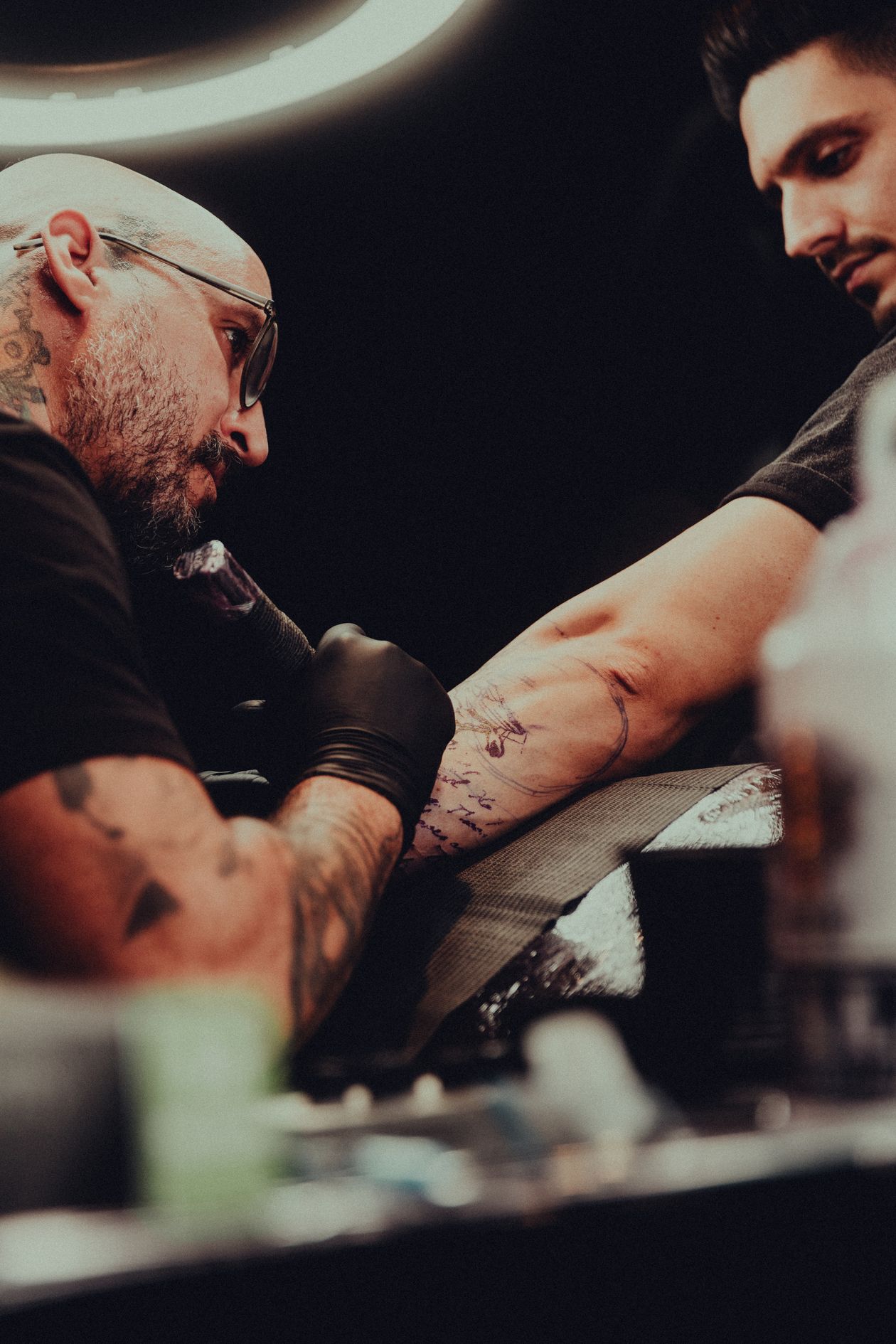
Stable, low-friction skin holds fine lines best: the outer arm, the back, the thigh, the calf. Trouble spots share traits. Fingers and hands flex constantly, wash constantly, and shed skin fast, so fine lines there fade and break up within a few years and need repeated touch-ups to stay readable. Feet take friction from shoes and socks. The inner wrist and elbow ditch bend all day, every day, and lines across a crease blur where the skin folds. Sun-heavy real estate, shoulders and forearms on someone who works outdoors in the Carolina summer, ages any tattoo faster, and fineline has the least margin to spend.
An honest artist will sometimes talk you out of a placement rather than sell you a tattoo they expect to disappoint you. That conversation is a green flag about the studio, even when it is not the answer you walked in wanting.
Choosing a design that will survive its style
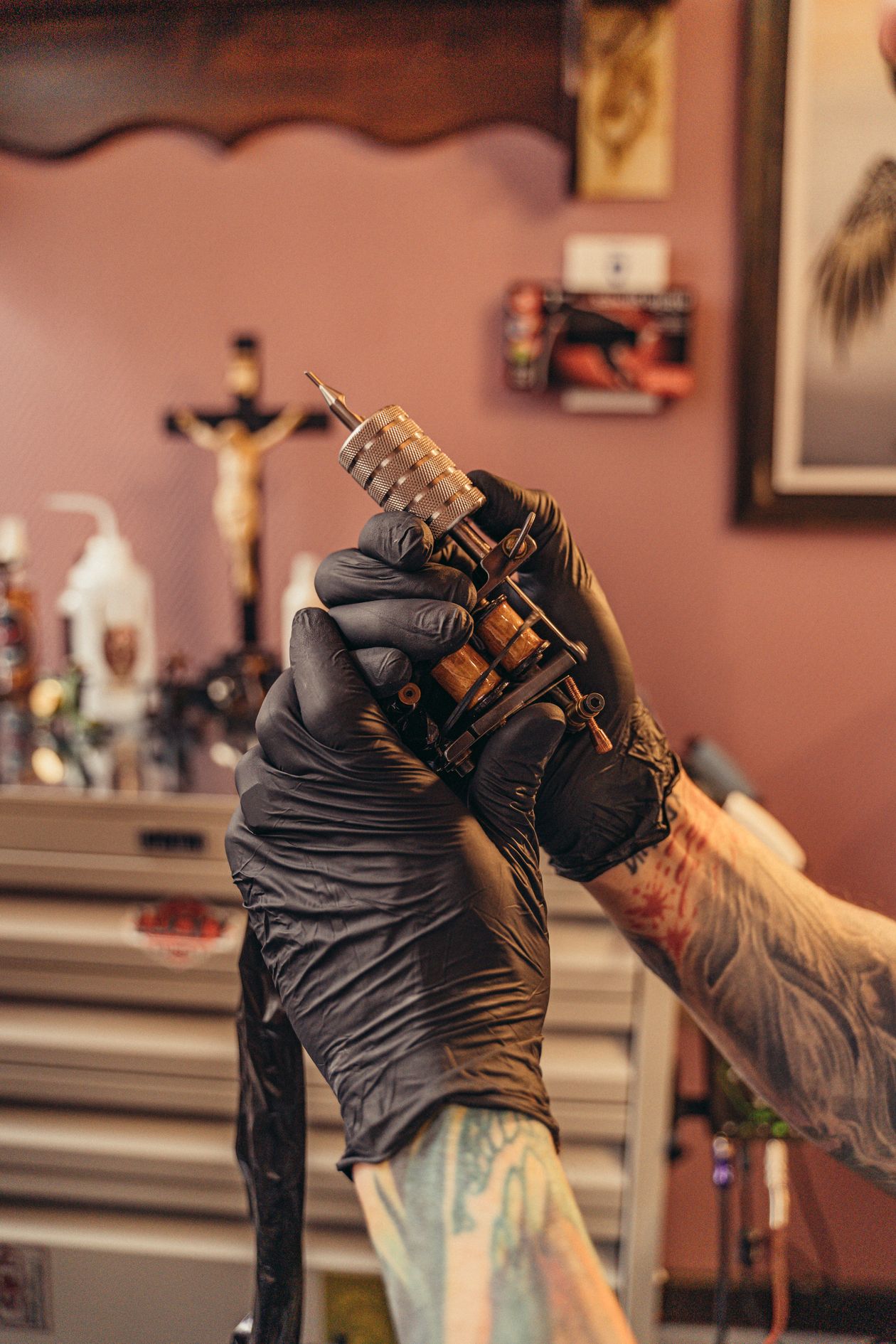
Design for the five-year photograph. Keep negative space generous, simplify tiny elements before they simplify themselves, and treat micro-lettering with suspicion: script needs stroke spacing to stay legible, and artists will steer you to a size where the letters keep their counters open. Ask to see healed work in the artist's portfolio, ideally work that is a year or more old. Fresh fineline photographs beautifully for everyone; healed fineline is the portfolio page that tells the truth, and a studio in Charlotte that has been doing this work for years will have healed examples to show.
Then protect the investment the boring way: heal it exactly as instructed, sunscreen it daily once healed, and budget for a touch-up in the early years if a line or two settles light. A fineline tattoo maintained like that can stay delicate for a long time. It just never maintains itself.
One more variable belongs in the calculation: your skin itself. Fine lines settle differently on sun-damaged skin, on very dry skin, and over areas where the skin is thin and mobile, like the side of the neck. None of that disqualifies a piece; all of it belongs in the consultation, where an artist can look at the actual canvas instead of a photograph of someone else's.
Common questions
Will my fineline tattoo need touch-ups?
More likely than bold work, yes. A settling touch-up in the first year or two is common, and high-friction placements may need periodic refreshes to stay crisp. Ask your artist about their touch-up policy at the consultation.
Why did my artist insist on making it bigger?
Because spacing is longevity. At a larger size the gaps between lines survive the slight thickening every line undergoes as it ages. Smaller would look fine in the first photo and merge within a few years.
Can any design be done fineline?
Most subjects can be translated, but dense detail cannot. Portraits, intricate florals, and small lettering all have minimum sizes below which the honest answer is to simplify the design or change the style.
Photos in this guide are representative stock images.
← All guides from Fu's Custom Tattoo← Back to Fu's Custom Tattoo