A tattoo leaves the studio looking finished and is, in fact, about half done. The other half happens on your skin over the next two weeks, and it is mostly a test of restraint. Fresh tattooed skin is a controlled wound: it needs to be kept clean, lightly moisturized, unsoaked, unsunned, and unpicked. None of that is complicated, and almost every bad heal you have ever seen came from violating one of the five, usually the last one.
Here is the fortnight as it actually unfolds, with the studio's instructions taking precedence over any general guide, including this one.
The aftercare checklist
- Leave the studio wrap on for as long as your artist directed, then remove it with clean hands.
- Wash once or twice daily with lukewarm water and a mild, fragrance-free soap, using your hand, never a cloth or sponge.
- Pat dry with a clean paper towel; a bath towel harbors bacteria and lint.
- Apply a thin layer of the recommended ointment or lotion: shiny is too much. Skin should look moisturized, not glazed.
- No soaking: showers yes, baths, pools, hot tubs, lakes, and the ocean no, until fully healed.
- No direct sun on the piece, and no sunscreen on it until the surface has closed and healed.
- Do not pick, scratch, or peel flakes and scabs, however ready they look.
- Wear clean, loose clothing over the area; skip tight workouts against fresh work.
- Sleep on clean sheets, and keep pets off a healing tattoo.
Days one to three: the sealed phase
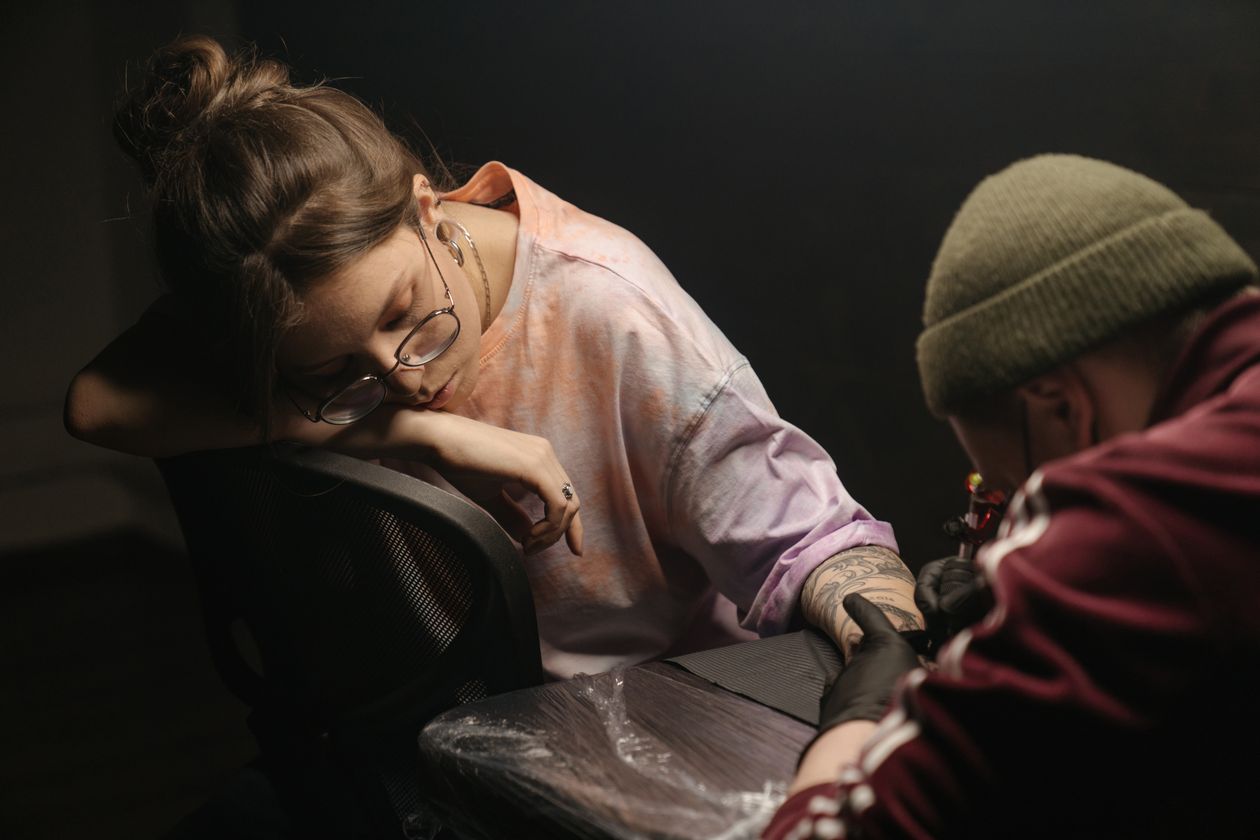
Expect the piece to be warm, sore in the way of a sunburn, and possibly weeping a little plasma and excess ink under the wrap. That fluid is normal and is what modern adhesive wraps are designed to hold against the skin. When the wrap comes off, the first wash sets the pattern: gentle water, gentle soap, no scrubbing, and the thin-ointment rule begins. Redness should be retreating day by day through this phase. Spreading redness, increasing pain after day two, heat, or yellow discharge are the warning set that earns a call to the studio and, if it progresses, a clinician. Infections in well-run studios are uncommon, but the early signs are worth respecting anywhere on the body.
Days four to ten: the itchy, flaky middle
The surface dries, tightens, and begins to flake like a peeling sunburn, with colored flecks in the flakes that worry first-timers unnecessarily: that is surface skin shedding, not the tattoo leaving. Underneath, the new skin is thin and shiny, which makes the piece look dull or milky for a while, sometimes called the silver skin stage. Then comes the itch, famously intense, arriving exactly when picking would do the most damage. Slap the area lightly if you must do something, add a whisper of lotion, and otherwise endure. Every scab pulled early takes ink with it and leaves a light spot that only a touch-up can fix.
Charlotte summers complicate this phase honestly: sweat under clothing, high humidity, and strong sun all press on a healing piece. Loose cotton, shade, and skipping the pool party are the whole strategy, and they are only for two weeks.
Week two and beyond: surface healed, settling continues
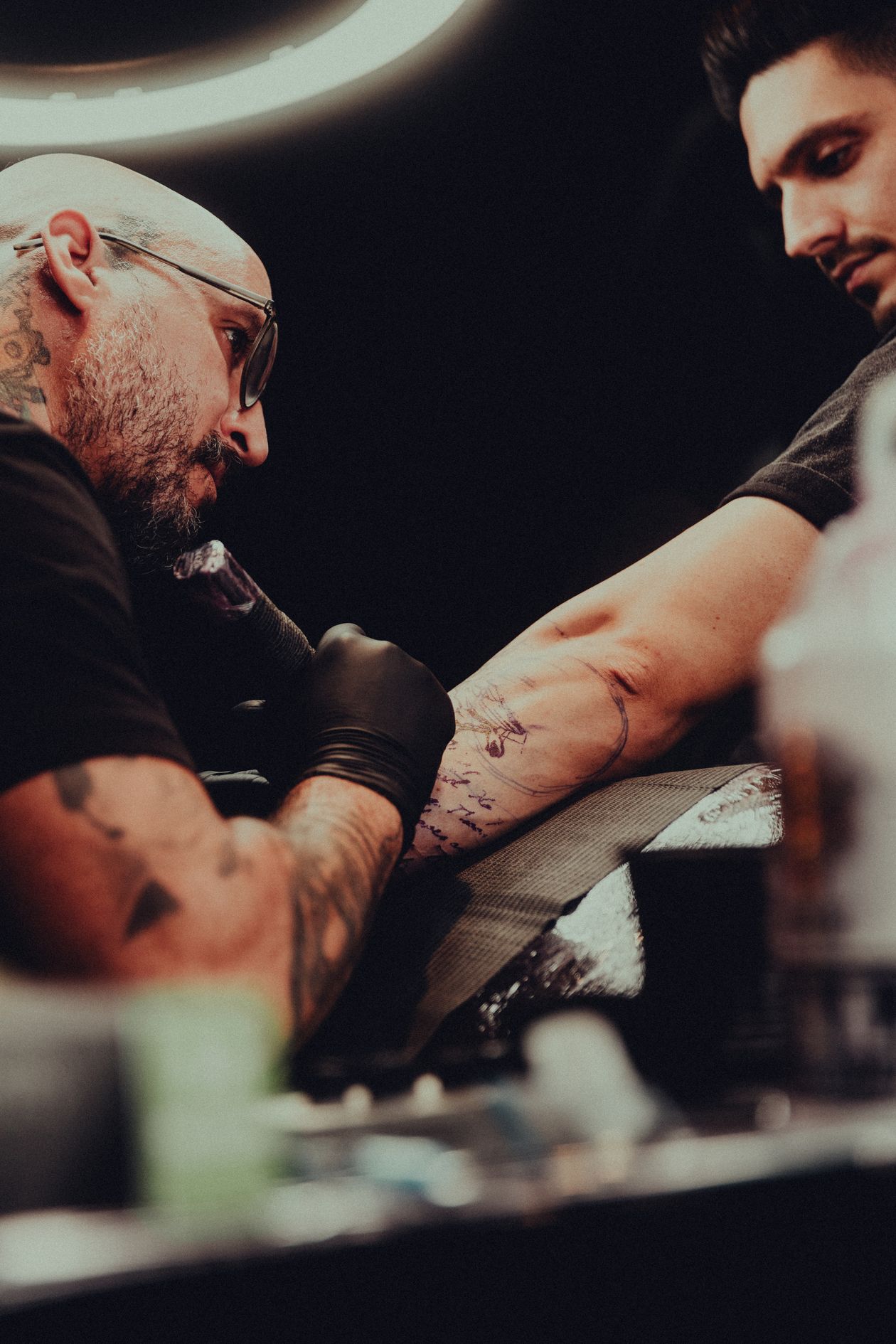
By the end of the second week most pieces are surface-healed: flakes gone, shine fading, soreness over. Deeper settling continues for several more weeks, which is why artists schedule touch-up assessments after a month or so rather than at day fourteen. Swimming and full sun exposure usually clear at this stage on your artist's word, and sunscreen becomes the permanent rule from here on. In the Carolina sun, an unprotected tattoo is a fading tattoo, steadily, every summer, for life. The two weeks were the intensive version of a habit that never entirely ends.
Common questions
My tattoo looks cloudy and dull at day ten. Is something wrong?
Almost certainly not. The thin new skin over a healing tattoo gives it a milky, dull cast for a period. Judge the piece at four to six weeks, when the surface has fully matured.
Can I work out with a fresh tattoo?
Light activity is usually fine, but avoid friction from clothing or equipment across the piece, shared gym surfaces against it, and heavy sweating drenching it in the first days. Your artist's guidance for your placement governs.
A small spot healed light. What now?
Wait until the piece is fully healed, then show your artist. Small light spots from a lifted scab or a stubborn patch are exactly what touch-ups exist for, and most studios stand behind their work on this.
Photos in this guide are representative stock images.
← All guides from Fu's Custom Tattoo← Back to Fu's Custom Tattoo